
Most founders assume that if their agency is being dishonest with them, it’s a bad-hire problem. Find better people, it goes away. In our experience, that’s rarely what’s actually happening.
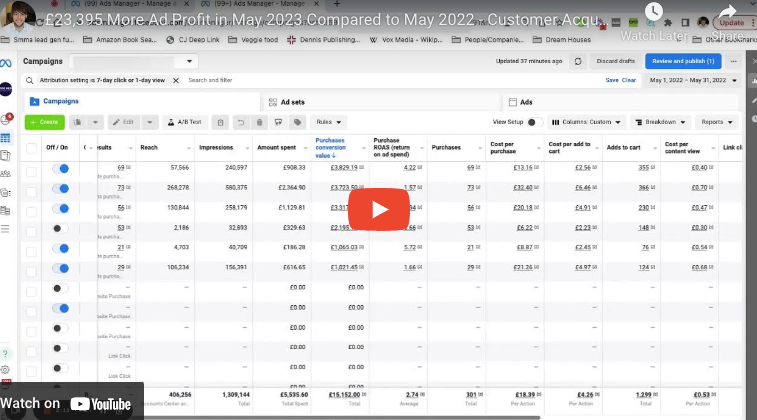
Here’s the mechanism instead. An agency gets hired to manage what happens inside the ad accounts — Meta, Google, the platforms. Naturally, the only numbers those platforms can produce are platform numbers: ROAS, CPA, impressions, clicks. The agency reports on what the tool it’s using can measure.
But the numbers that actually decide whether a brand is scaling profitably don’t live inside Meta or Google at all. They live in the brand’s own finance system and Shopify: contribution margin by product, true customer acquisition cost tracked by the cohort that was actually acquired, blended MER across every channel, and lifetime value by product line. None of that is visible to an ad platform. None of it can be.
So the agency ends up reporting the only number it can see, and the client ends up managing the relationship against that same number, because it’s the one both sides can point to in a weekly call. Not because it’s the right number. Because it’s the only number the tool can produce and the contract can defend.
This is why switching agencies so often changes nothing. A new team walks in, inherits the same ad accounts, gets measured the same way, and ends up optimising for the same platform-reported ROAS the last agency did. The people changed. The scoreboard didn’t.
What it actually costs
Take a brand spending $30,000 a month on ads. Meta and Google each report their own version of what that spend produced, and — as we’ve written about elsewhere — those two numbers routinely disagree with each other by a wide margin, and neither one reconciles cleanly against what actually lands in the bank account. If a founder is allocating next month’s budget based on that gap rather than on real backend numbers, the gap itself is doing the deciding. Even a modest misallocation compounds fast at that spend level — a flat quarter, or worse, is a realistic outcome of budgeting off the wrong number for three months running. We’re not going to put a precise industry-wide figure on that here, because the size of the gap is different for every brand and every account — it’s worth someone running their own numbers rather than taking anyone’s average as gospel.
How we’ve actually built around it
Two things are true of how we work, and neither is aspirational — they’re both already running.
First, every client gets an external dashboard that isn’t built on platform-reported numbers at all. It runs on the real seven-line waterfall — gross sales down to net profit, through COGS, VAT, shipping, returns, discounts, chargebacks, and ad spend — the same numbers a founder’s own finance system would show. It’s the metrics layer that lives outside the ad platforms, because it was never built from them in the first place.
Second, and this is the part that actually removes the incentive problem rather than just making it visible: we’re paid a percentage of net profit, not a flat retainer, and not a cut of ad spend. If the account isn’t generating real profit, we don’t get paid much. If it is, we do. That means we have no structural reason to ever defend a platform ROAS number to a client — there’s nothing in it for us to do so. The thing we’re optimising for and the thing the client actually cares about are the same number, because it’s literally how we get paid.
It also does something for a client’s cash flow that a flat retainer never does. Growth isn’t a straight line — some months are stronger than others. A brand on a fixed monthly fee carries that fixed cost regardless of how the account performs that month. A brand paying a percentage of profit isn’t carrying that risk. When performance dips, so does the fee. There’s no version of this where a client is paying thousands for a media buyer’s time in a month the account didn’t earn it.
Where that leaves you
If a conversation with your current agency keeps circling back to a platform number that doesn’t match what’s actually happening in your bank account, that’s not necessarily a sign you hired the wrong people. It might be a sign you’re both being measured on the wrong thing. Worth checking with the same gross-to-net exercise and CPA diagnostic we’ve written about before, run against your own real numbers rather than what any dashboard is reporting back to you.