Most DTC brands treat paid acquisition and email/SMS retention as two separate line items — often run by different people, sometimes different agencies entirely. That separation is one of the more expensive, least visible mistakes a scaling brand can make.
The Metrics Are Connected, Not Independent
A lower CAC payback period — the number of days it takes to recover the cost of acquiring a new customer — is far easier to achieve when a strong retention program converts new customers into repeat buyers quickly. If a new customer’s second and third purchases arrive fast, the business recovers its acquisition cost sooner, freeing up capital to acquire the next customer.
Flip it around: even a brilliantly efficient ad account, with a low CPA and strong ROAS, will still show a stretched payback period if the retention side isn’t converting new customers into repeat buyers. The acquisition number looks fine. The cash flow reality doesn’t.
What Each Side Owns
Acquisition (paid media) is responsible for driving new customers profitably, tracking MER, CAC, payback, and new customer revenue %, and scaling only within healthy financial guardrails.
Retention (email/SMS) is responsible for monetizing the customer base — improving lifetime value, reducing payback period, and compounding the value of every customer acquisition already paid for.
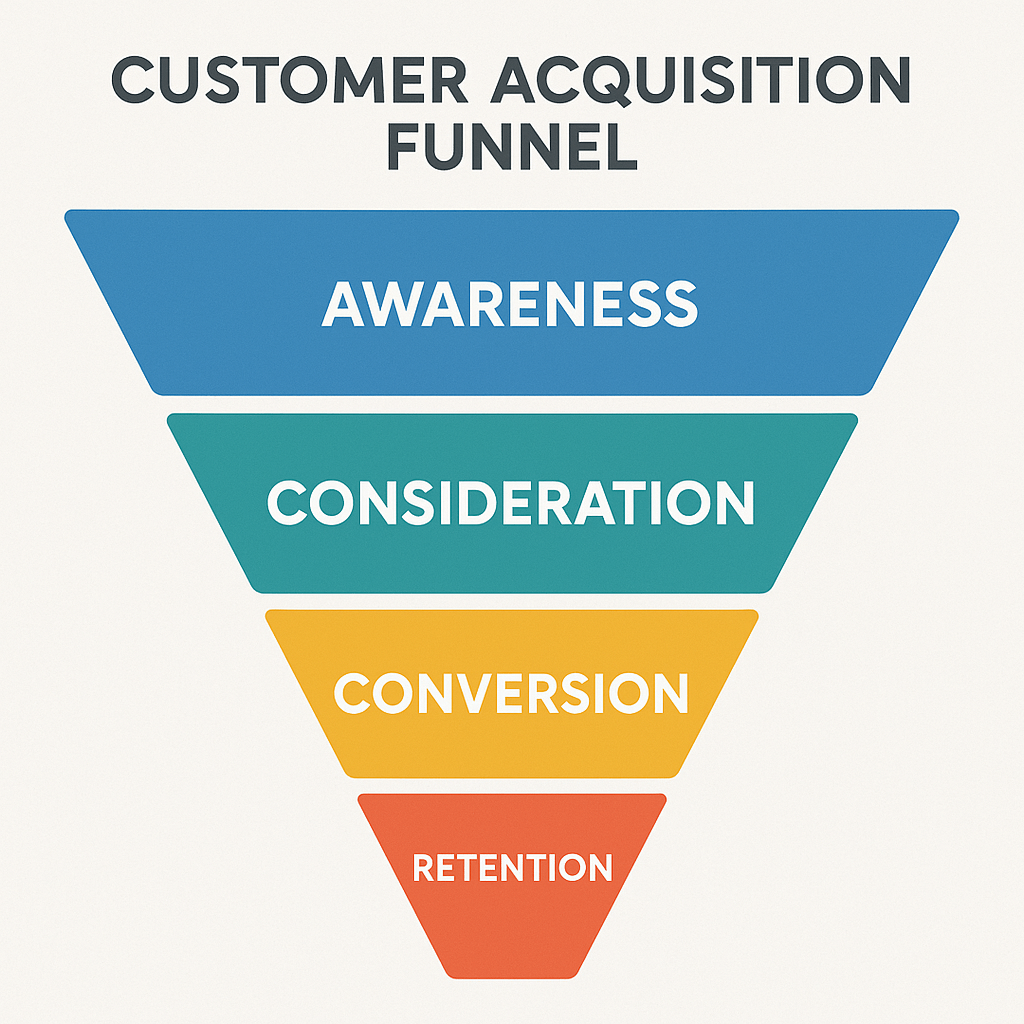
Neither side is complete without the other. A brand acquiring customers efficiently but failing to retain them is running a leaky bucket — constantly refilling from the top while value drains out the bottom just as fast.
Why This Gets Missed
It’s an easy mistake to make structurally, because acquisition and retention often look like genuinely separate skill sets — media buying versus email copywriting and flow building. But the business outcome they’re both accountable to is the same one: the full economics of a customer, from first ad impression to their lifetime value.
When they’re run by disconnected teams optimizing for disconnected metrics — ROAS on one side, open rates on the other — nobody is actually accountable for whether the full system is working.
The Full-Circle View
Owning both sides means owning the entire customer economics equation: what it costs to acquire someone, how quickly they pay that back, and how their value gets extended over time. No individual platform, tool, or AI layer does that end-to-end — it takes a single point of accountability treating acquisition and retention as one connected system, not two separate services running in parallel.